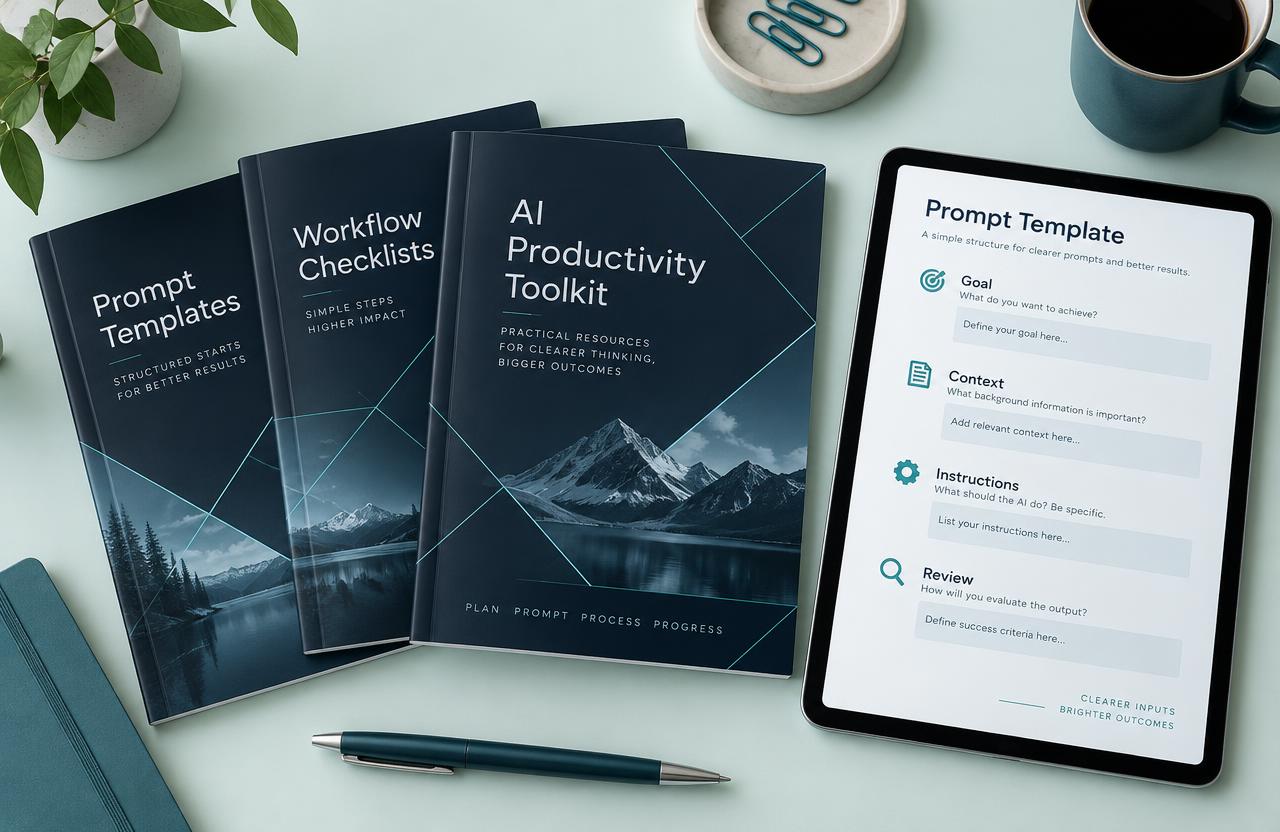
Choose a low-risk first task
Begin with work where a person can easily check the result: drafting an internal checklist, restructuring non-sensitive notes or brainstorming questions for a meeting. Avoid making your first experiment a customer commitment, financial decision or assessment affecting an employee.
Define what a good output looks like before using AI. A useful test has a clear purpose, an identified reviewer and a way to compare the result with the existing approach.
Know what you are sharing
Do not enter customer records, employee details, confidential agreements or passwords into an unapproved tool. Check the service's data handling, retention, access controls and terms for your actual account and plan. A setting on one plan may not apply to another.
Remove identifying details where possible. If sensitive information is essential to the task, pause until the organisation has approved the tool and established appropriate safeguards.
Give clear instructions and check the answer
Describe the task, relevant context, intended audience and required format. Tell the tool what it must not invent. AI can produce confident but incorrect information, so check calculations, factual statements and references against reliable original sources.
Treat an AI draft as a starting point, not authority. A reviewer needs enough subject knowledge to recognise mistakes and should remain responsible for the final output.
Write a short team agreement
A concise policy is often more useful than a long document nobody reads. Explain approved tools, permitted tasks, prohibited inputs, review requirements and where staff should raise concerns.
- List approved tools and who administers access.
- State which information must never be entered.
- Require human review before external use.
- Provide a way to report errors or accidental disclosure.
- Review the policy when tools or business needs change.
Measure usefulness, not novelty
Look at time spent reviewing as well as time spent generating. Track whether the output is accurate and useful, and whether staff understand its limitations. Stop a trial if review effort outweighs the benefit or if risks cannot be controlled.
The practical takeaway
Start small, protect information and make human review part of the workflow from day one.
General educational information only. Consider your organisation's circumstances and seek qualified advice for legal, financial, privacy or regulatory decisions.