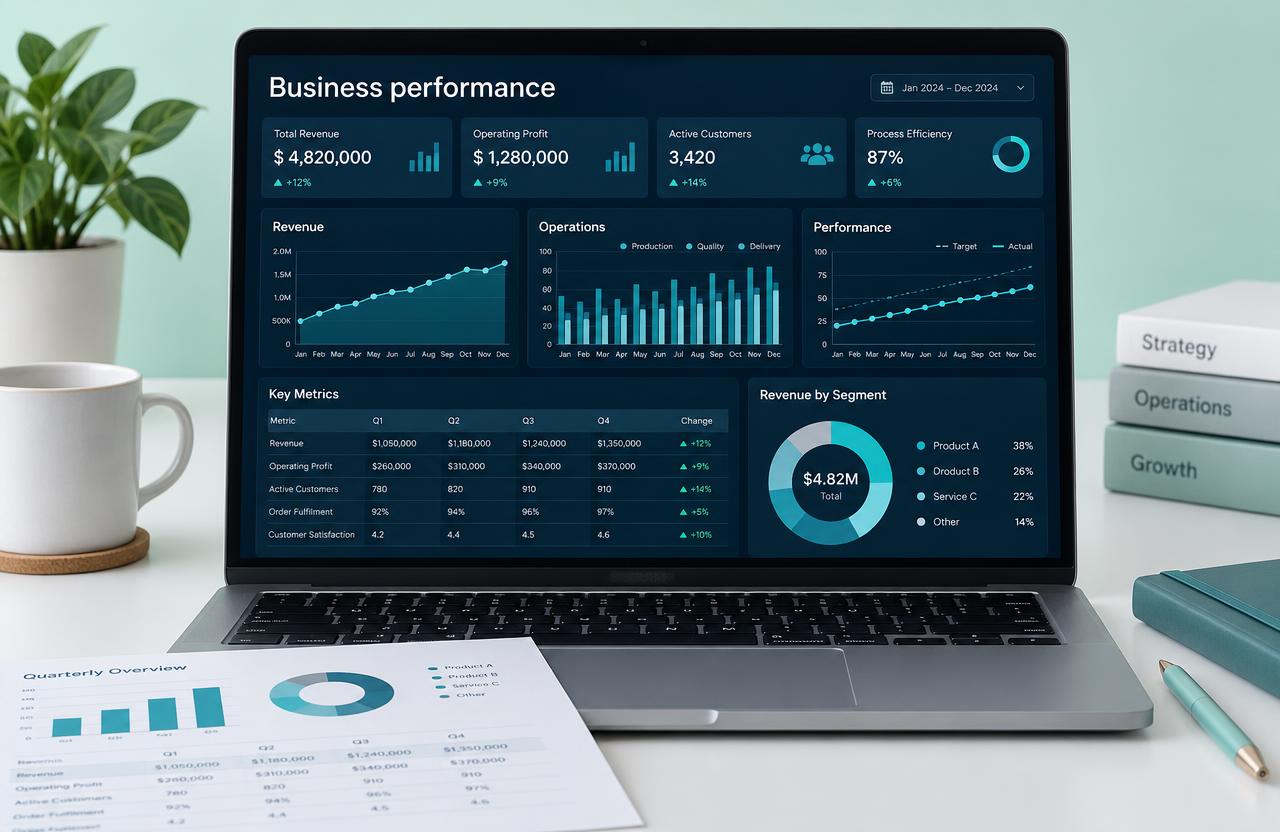
Start with the decision
Before building charts, identify a question a manager needs to answer. Do we have enough capacity next month? Where are jobs being delayed? Which expenses need attention? A report should support a decision, not simply display every available number.
Agree what each measure means
Write down the definition, source, reporting period and owner of every key measure. For example, an enquiry, a qualified lead and a confirmed customer are different things. If teams use those words differently, a dashboard can create disagreement instead of clarity.
Be explicit about exclusions, incomplete records and the date used for reporting. Consistent definitions matter more than elaborate visual design.
Check the source before drawing conclusions
Look for missing dates, duplicate entries, inconsistent categories and totals that do not reconcile. Compare a sample with the source system or original records. Keep a visible note of limitations rather than presenting uncertain data as precise.
Assign someone to resolve recurring data issues at the point of entry. Repeated manual corrections in a report can hide a problem that needs fixing upstream.
Add context to the number
A single figure rarely tells the whole story. Compare it with a relevant prior period or an agreed target, and consider seasonal changes or changes in workload. Avoid treating correlation as proof of cause. A change in performance is a prompt to investigate, not an automatic explanation.
Close the loop with an action
Use a regular review to agree what happens next, who owns it and when it will be checked. Record the decision alongside the measure so the team can learn whether the action helped.
- Choose one decision the report should support.
- Agree definitions and check a source-data sample.
- Show the reporting period and last update.
- Assign an action owner and review date.
The practical takeaway
Useful reporting connects a trusted measure to a clear question, an owner and an action.
General educational information only. Consider your organisation's circumstances and seek qualified advice for legal, financial, privacy or regulatory decisions.